Auditory Verbal Therapy (AVT)
Helping children with hearing loss build listening, spoken-language and everyday communication skills through meaningful experiences and family participation.
Explore what Auditory Verbal Therapy involves, how parents can support learning, and the role of hearing technology in a child’s communication journey.

What Is Auditory Verbal Therapy?
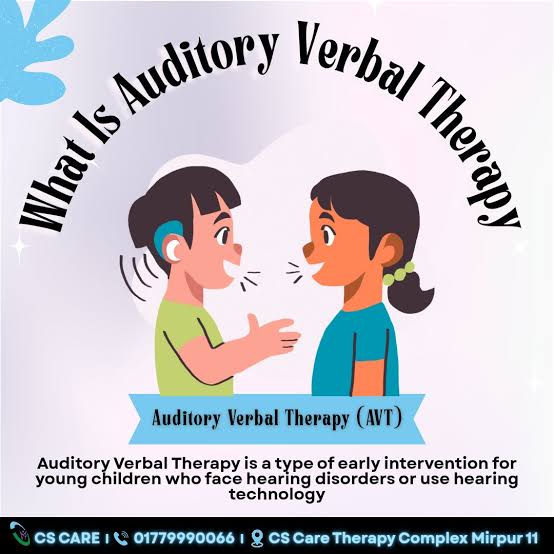
Auditory Verbal Therapy is a family-centred approach that supports children who are deaf or hard of hearing to develop listening and spoken-language skills. It uses a child’s access to sound, purposeful listening experiences and everyday communication opportunities.
Therapy activities are planned around the child’s developmental stage and individual needs. Parents and caregivers are supported to use strategies during daily routines so that listening and communication practice continues beyond the therapy session.
Who Can Benefit from AVT?
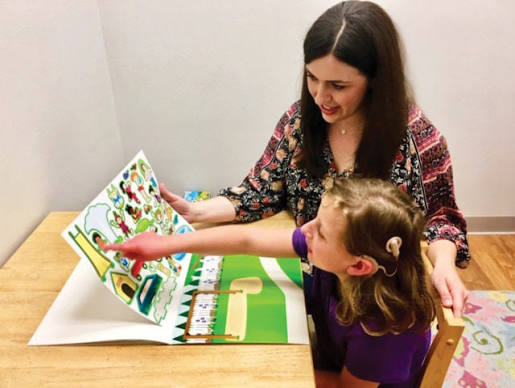
AVT may be considered for children with hearing loss who are learning to use listening as an important pathway for communication. Suitability depends on hearing access, developmental profile, family priorities and professional assessment.
Children with hearing loss
Children who are deaf or hard of hearing may benefit from support that develops listening and communication skills.
Children using hearing technology
Children who use hearing aids or cochlear implants may need support to make sense of the sounds they can access.
Families seeking guidance
Parents and caregivers who want practical strategies to encourage communication during everyday routines can be active partners in intervention.
Goals of Auditory Verbal Therapy
Goals are selected according to each child’s age, abilities, hearing access and communication needs. They may include:
- Noticing and responding to meaningful sounds.
- Developing listening attention and auditory understanding.
- Learning to understand spoken words and instructions.
- Building vocabulary, language and conversational skills.
- Supporting communication in home, school and community settings.
How Does AVT Work?
AVT uses planned, play-based and everyday listening experiences. The professional guides parents to notice opportunities for listening and spoken communication throughout the day.
Listen with purpose
Activities encourage the child to attend to sounds, words and spoken messages that are meaningful in context.
Build communication
The adult models language, responds to the child’s attempts and creates natural opportunities for interaction.
Practise in daily life
Strategies are adapted for routines such as play, mealtimes, reading, getting dressed and family conversations.
Why Is Parent Involvement Important?
Parents and caregivers know their child best. Their participation helps connect therapy goals with the child’s real-life experiences and communication needs.
- Practise recommended strategies during familiar routines.
- Notice and share changes in the child’s listening and communication.
- Ask questions and work with the professional to review goals.
- Keep communication enjoyable, responsive and meaningful.


Developing Listening Skills
Listening skills develop gradually. Depending on the child’s stage and access to sound, activities may focus on:
- Sound awareness: noticing that a sound is present.
- Sound attention: turning attention towards a sound or speaker.
- Sound identification: recognising familiar sounds or words.
- Understanding: making meaning from spoken language in context.
Progress is individual, and activities should be adjusted to the child rather than treated as a fixed checklist.
Supporting Speech and Language Development
Listening and language experiences can support a child’s understanding and use of communication. Therapy goals may include growing vocabulary, combining words, understanding questions, following directions and taking turns in conversation.
Understanding language
Help the child connect spoken words with people, objects, actions and everyday experiences.
Expressing ideas
Encourage the child to communicate choices, needs, observations and feelings in ways appropriate to their stage.
Everyday interaction
Use play, stories and shared activities to create enjoyable opportunities for back-and-forth communication.
Hearing Aids and Cochlear Implants
Hearing aids and cochlear implants may provide access to sound for some children with hearing loss. The type of technology and its suitability are determined by qualified hearing-care professionals following appropriate assessment.
When a child uses hearing technology, consistent use, device checks and follow-up with the audiology team are important. AVT may work alongside audiological care to help the child learn to interpret and use the sounds they can access.
A coordinated support team
Depending on the child’s needs, families may work with audiologists, ENT specialists, speech-language professionals and other members of the child’s care and education team.
What Happens During an AVT Session?
Session plans vary according to the child’s age, goals and developmental needs. A session may include guided parent coaching, listening-based play and a review of progress.
Review and plan
The professional and family discuss recent progress, priorities and the child’s current goals.
Play and practise
Activities create opportunities for listening, understanding and spoken communication in meaningful contexts.
Parent coaching
The family discusses practical ways to continue appropriate activities at home and what to observe before the next visit.
Every Child’s Communication Journey Is Different
Children develop at different rates. Progress can depend on factors such as the type and degree of hearing loss, age when hearing loss is identified, access to suitable hearing technology, consistent support and other developmental needs.
Regular reviews help families and professionals understand what is working and adapt goals when needed. There is no single timeline or guaranteed outcome for every child.
Frequently Asked Questions About AVT
Quick answers to common questions from parents and caregivers.
1. What does AVT stand for?
AVT stands for Auditory Verbal Therapy. It is a family-centred approach that supports listening and spoken-language development for children who are deaf or hard of hearing.
2. Is AVT suitable for every child with hearing loss?
Not necessarily. Suitability depends on the child’s hearing access, developmental needs, family goals and professional assessment. Families should discuss available communication approaches with qualified professionals.
3. At what age can a child begin AVT?
Support may begin early, once hearing needs have been identified and the family has access to appropriate assessment and guidance. A professional can advise on timing for an individual child.
4. Does a child need hearing aids or a cochlear implant for AVT?
AVT focuses on developing listening and spoken-language skills through the child’s available access to sound. Hearing technology decisions are made through appropriate audiological and medical assessment.
5. What is the role of parents in AVT?
Parents are active partners. They learn strategies from the professional and use suitable listening and communication opportunities during everyday routines.
6. How long does AVT take?
There is no fixed duration that applies to every child. The frequency and length of support depend on individual goals, progress and the professional plan.
7. What activities are used during AVT?
Activities may include play, shared books, songs, everyday routines, sound awareness activities and conversation, selected to match the child’s needs and goals.
8. Is AVT the same as speech therapy?
They are related but not identical. AVT is a specific family-centred approach for children who are deaf or hard of hearing, with a strong focus on listening and spoken-language development. Speech-language services may use a range of approaches based on individual needs.
9. Can AVT replace audiology appointments?
No. AVT does not replace hearing assessments, hearing technology checks, device programming or medical follow-up. These remain important parts of a child’s support.
10. How can I know whether my child needs an assessment?
If you have concerns about your child’s hearing, listening, speech or language development, speak with a qualified healthcare professional or audiologist about an appropriate assessment.
11. Can parents practise at home?
Yes. A professional can suggest practical activities that fit naturally into family routines. Home practice should be enjoyable, appropriate to the child and guided by the child’s individual plan.
12. Where can I ask about AVT support at Hear & Speak Clinic?
Contact the clinic to confirm current service availability, professional qualifications and whether the service is appropriate for your child. Visit the Contact Us page or message the clinic on WhatsApp.
Have Questions About Your Child’s Listening and Communication?
Speak with Hear & Speak Clinic to enquire about available services and the next steps for your child.
This page provides general information and is not a diagnosis or a substitute for individual audiological, medical or therapy advice.