Supporting Access to Sound & Spoken Communication.
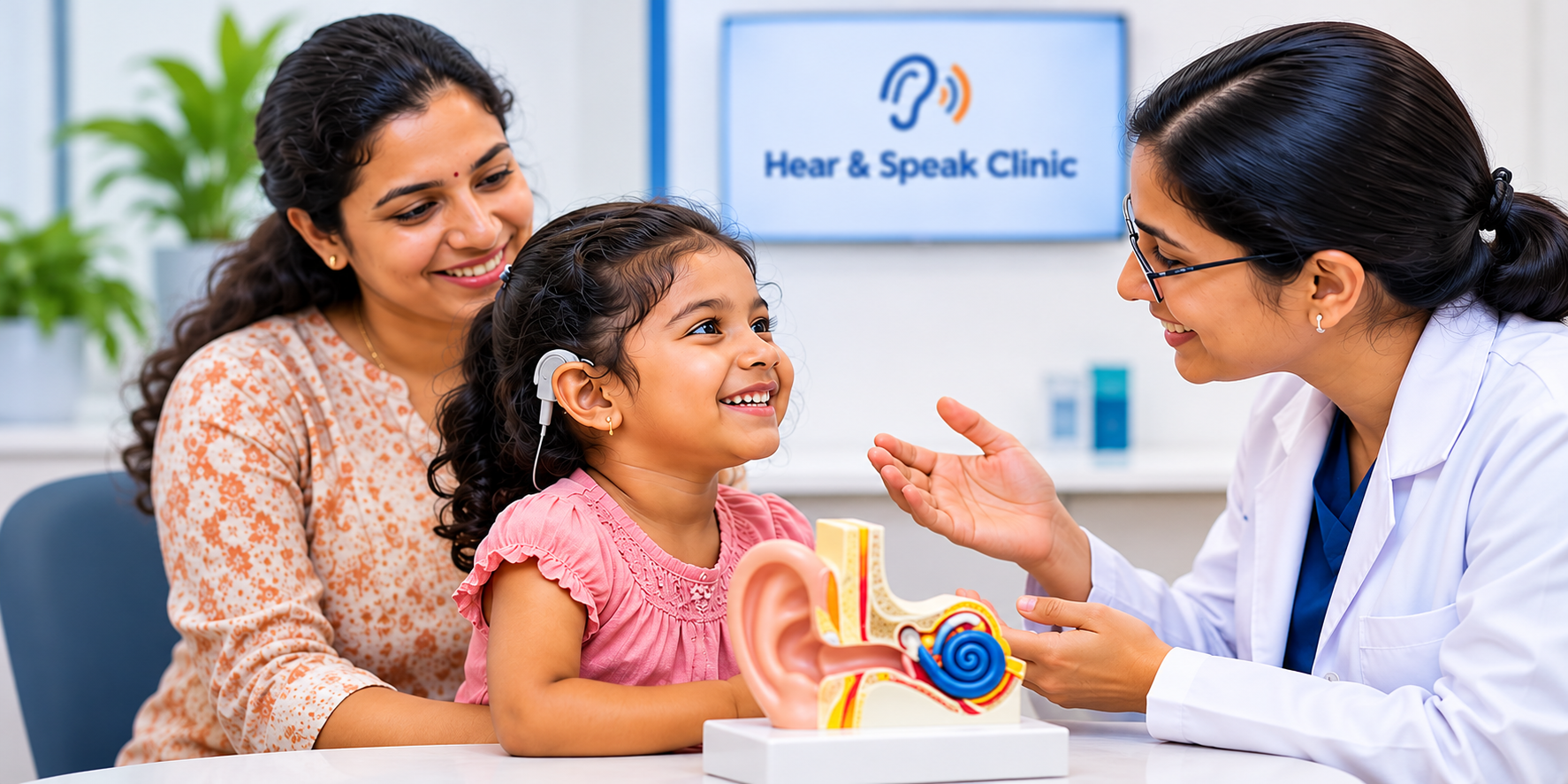
When severe-to-profound sensorineural hearing loss limits speech understanding with conventional hearing aids, a cochlear implant can provide direct auditory nerve stimulation. At Hear & Speak Clinic in Hyderabad, we guide children and adults through candidacy evaluation, processor mapping, and auditory rehabilitation.
External & Internal Cochlear Implant Components
Unlike hearing aids that amplify acoustic sound, a cochlear implant bypasses damaged inner-ear hair cells and sends coded electrical signals directly to the auditory nerve.
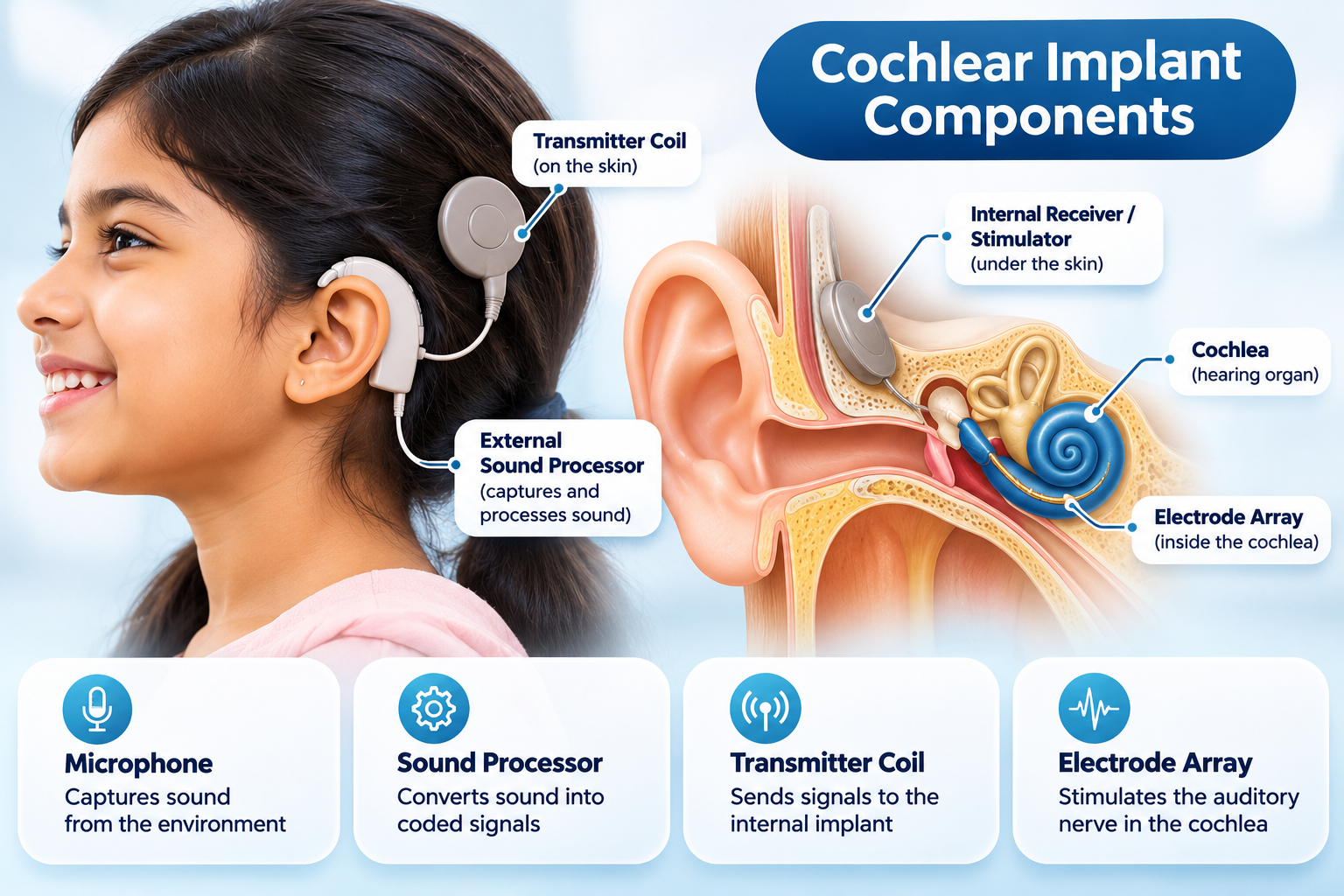
Sound Processor
Worn behind the ear or off the ear, microphones capture environmental speech and convert sound waves into digital signals.
Transmitter Coil
Held magnetically over the skin behind the ear, the coil transmits coded digital signals across the skin to the internal implant.
Receiver-Stimulator
Placed beneath the skin during surgery, it decodes the signals from the external processor into precise electrical pulses.
Electrode Array
A thin, flexible array placed inside the cochlea that stimulates auditory nerve fibers, allowing the brain to perceive sound.
Who Is Eligible for a Cochlear Implant?
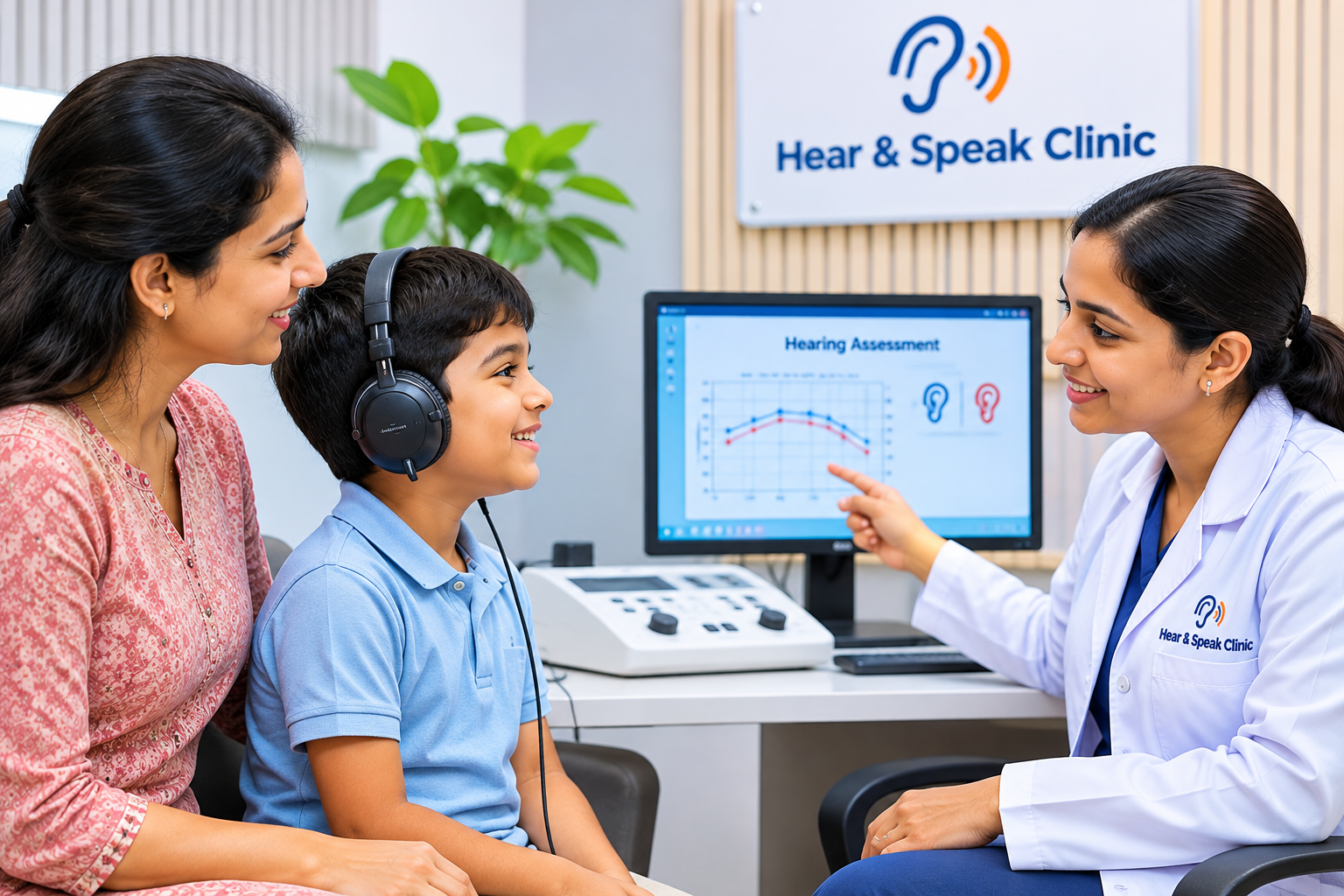
Candidacy depends on detailed audiological findings, aided hearing aid performance, medical imaging, and individual communication goals rather than hearing thresholds alone.
Key Evaluation Criteria
- ✓Audiological Profile: Severe-to-profound sensorineural hearing loss in one or both ears confirmed via diagnostic hearing evaluation (PTA, Speech Audiometry, BERA, and OAE).
- ✓Limited Hearing Aid Benefit: Difficulty understanding spoken words even with appropriately fitted high-power hearing aids.
- ✓Medical & Anatomical Suitability: ENT surgical review, inner-ear imaging (CT/MRI), and intact auditory nerve function.
- ✓Commitment to Follow-Up: Family and patient readiness for scheduled processor mapping and post-implant rehabilitation.
Cochlear Implant Services in Hyderabad
Our A.S. Rao Nagar and ECIL clinics provide end-to-end audiological and speech-language support before and after implantation.
Candidacy & Diagnostic Evaluation
Complete diagnostic battery to establish baseline hearing thresholds and verify whether hearing aids or a cochlear implant offer better speech access.
- ✓Pure-Tone Audiometry (PTA) & Speech Discrimination scores
- ✓Objective BERA & OAE testing for infants and young children
- ✓Aided hearing aid benefit trial & baseline speech-language evaluation
Processor Guidance & ENT Coordination
Objective guidance on external sound processor options, bimodal configurations, and coordination with experienced cochlear implant ENT surgeons.
- ✓Comparison of behind-the-ear and single-unit off-the-ear processors
- ✓Guidance on bimodal hearing (implant + opposite-ear hearing aid)
- ✓Pre-surgical family counselling and realistic expectation setting
Switch-On Activation & Mapping
Precision programming of your external sound processor after surgical healing so each electrode delivers clear, comfortable stimulation.
- ✓Initial processor switch-on (typically 2–4 weeks post-surgery)
- ✓Electrode threshold and comfort level calibration (MAP creation)
- ✓Regular progressive mapping updates & processor troubleshooting
Paediatric AVT & Adult Rehabilitation
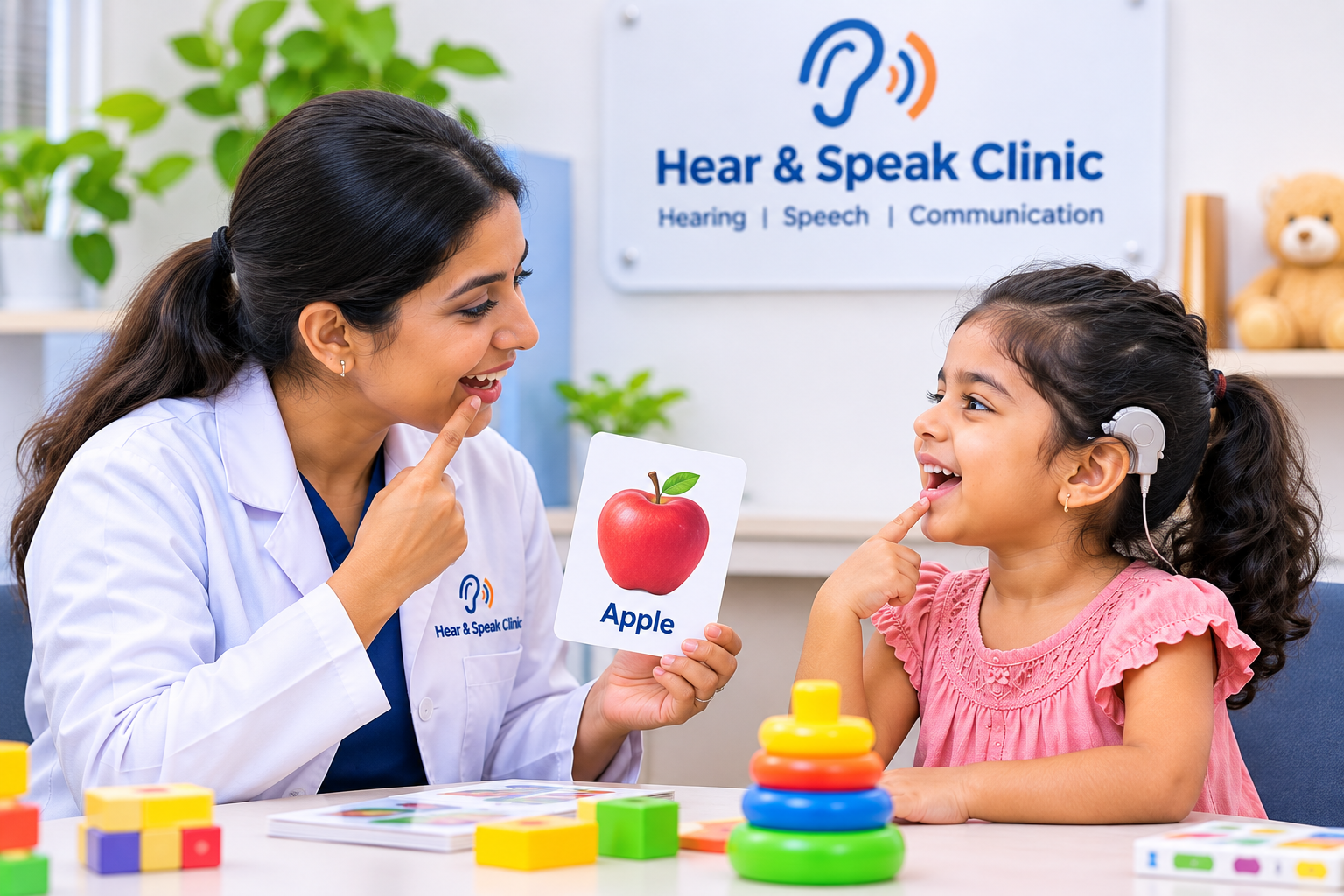
Structured one-on-one therapy tailored to the patient's age and communication stage to turn new electrical sound signals into meaningful speech.
- ✓Auditory-Verbal Therapy (AVT) & parent coaching for children
- ✓Targeted auditory training & speech-in-noise practice for adults
- ✓Ongoing milestone tracking with our speech-language pathologists
Life After Cochlear Implantation
Receiving a cochlear implant is the start of a gradual learning journey. While the implant restores access to sound signals, the brain needs consistent wear and structured therapy to interpret speech clearly.
1. Activation & Gradual Adaptation
At switch-on, sounds may initially feel unfamiliar or mechanical. Over the first few months of progressive mapping, sound quality becomes clearer and more natural.
2. Age-Appropriate Rehabilitation
Children build listening and spoken language step by step through Auditory-Verbal Therapy (AVT), while post-lingual adults focus on auditory training and noisy-environment listening.
3. Daily Care & Long-Term Support
Consistent full-time processor wear, moisture protection, battery/coil care, and annual audiological checkups keep the system performing reliably.
Your 5-Step Cochlear Implant Journey
From diagnostic evaluation to everyday communication, our team supports patients and families at each stage.
Audiological Workup
Diagnostic PTA, Speech, BERA, and hearing aid trial to assess candidacy.
ENT & Medical Review
CT/MRI imaging and surgical consultation with an ENT implant specialist.
Implant Surgery
Surgical placement of the internal implant under hospital ENT care.
Switch-On & Mapping
Processor activation and personalized electrode mapping at our clinic.
Rehabilitation & Care
Structured AVT or adult auditory training and scheduled follow-ups.
Audiology & Speech Rehabilitation Under One Roof
At our A.S. Rao Nagar and ECIL clinics in Hyderabad, RCI-registered audiologists and speech-language pathologists collaborate closely so mapping adjustments and therapy goals stay aligned.
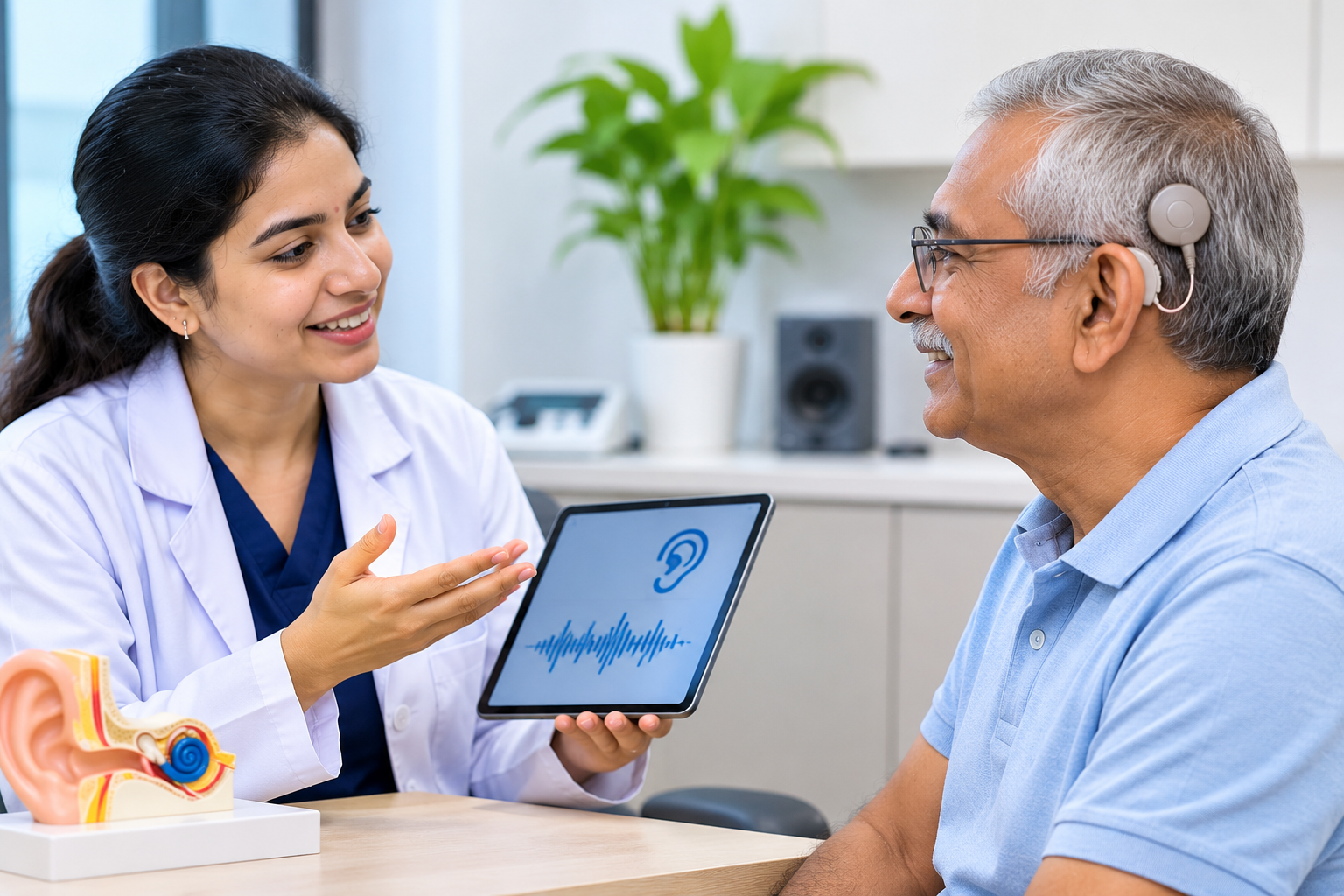
RCI-Registered Clinical Team
Qualified audiologists and speech-language pathologists experienced in paediatric and adult cochlear implant care.
Multi-Platform Implant Support
Clinical guidance, processor programming, and rehabilitation coordination across leading implant systems (Cochlear™, MED-EL, and Advanced Bionics).
A.S. Rao Nagar & ECIL Clinics
Conveniently located in East Hyderabad & Secunderabad for regular follow-up mapping, processor care, and weekly speech therapy.
Frequently Asked Questions About Cochlear Implants
Clear answers on cochlear implant candidacy, switch-on mapping, bimodal hearing, and speech therapy in Hyderabad.
Discuss Cochlear Implant Options with Our Team
Schedule a candidacy assessment, processor mapping session, or rehabilitation consultation at Hear & Speak Clinic in Hyderabad.