More Listening Effort
When speech is difficult to hear, you may need to concentrate harder, watch faces closely, or ask people to repeat themselves. Conversations can feel tiring.
Hearing is more than detecting sound. It helps us follow conversations, stay connected with people, and take part in everyday life. If hearing has become difficult, a hearing evaluation can help you understand what is happening and what to do next.

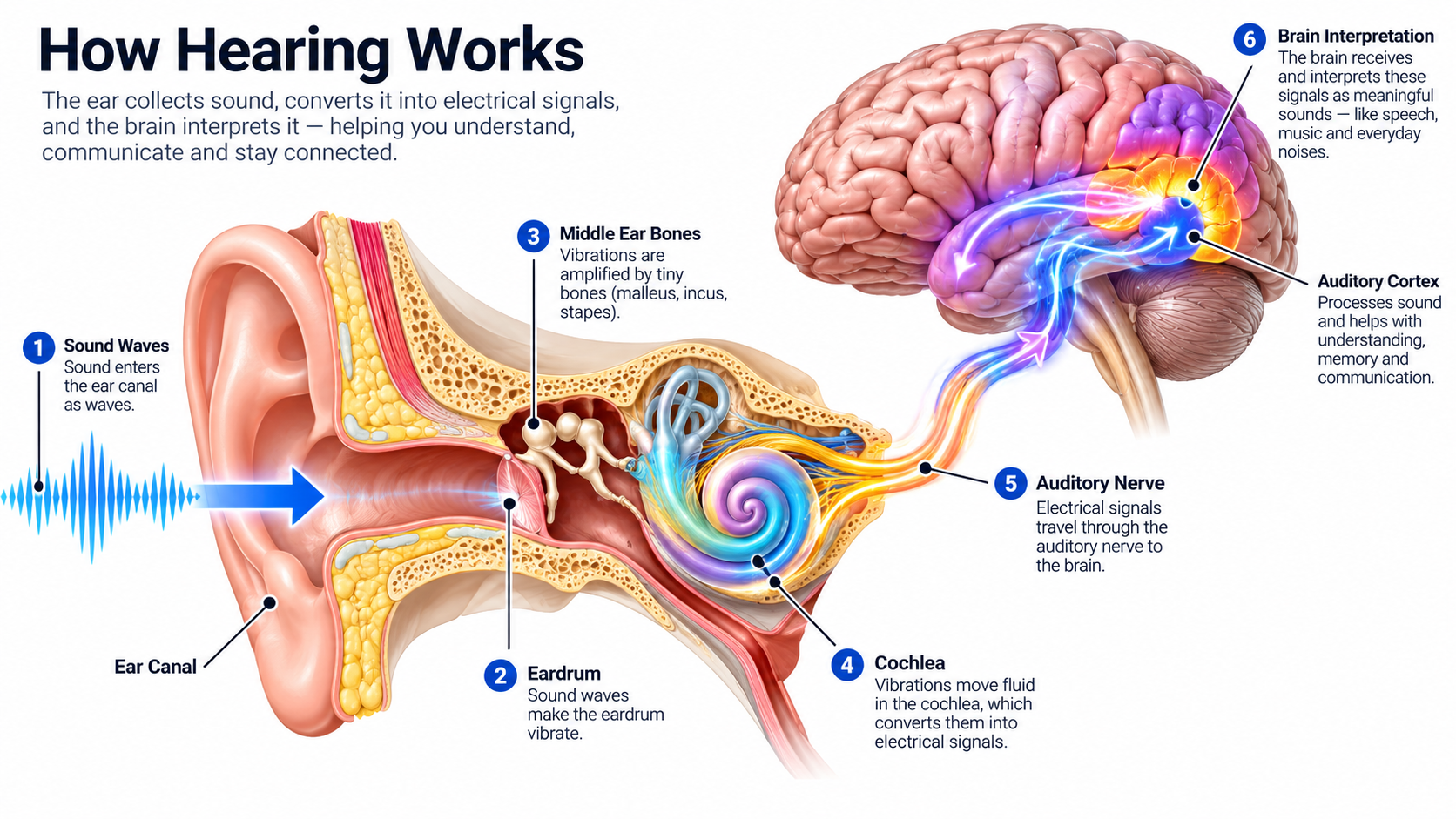
When we hear speech, the ears collect sound and send signals through the auditory system. The brain then helps us recognise words, understand meaning, and respond. Hearing and thinking work together throughout everyday communication.
When sounds are unclear, following a conversation can take more effort. Some people may also find group conversations tiring or begin avoiding situations where hearing feels difficult.

Watch this short video to learn more about how hearing supports communication and everyday connection.
Video playback may use additional data. Select play when you are ready to watch.
Everyone's experience is different. These are common challenges worth discussing with a hearing-care professional.
When speech is difficult to hear, you may need to concentrate harder, watch faces closely, or ask people to repeat themselves. Conversations can feel tiring.
Missing words in meetings, family conversations, or noisy places can cause frustration and make it harder to feel included.
Some people avoid gatherings when hearing becomes difficult. Staying connected with friends and family is an important part of overall wellbeing.
If you regularly struggle to follow conversations, need the television louder than others prefer, or find speech unclear in noisy places, consider arranging a hearing evaluation.
An assessment can help establish how well you hear different sounds and whether further care may be useful. Depending on the findings, a professional may discuss hearing support, communication strategies, or referral for medical review.
Hearing aids can improve access to sound and communication for many people with hearing loss. Research into whether hearing treatment changes cognitive decline is ongoing; hearing aids should not be presented as a guaranteed way to prevent dementia.
Ask About a Hearing Evaluation →You do not need to wait until hearing difficulties become overwhelming to ask for advice.
Think about when hearing feels difficult: phone calls, television, group conversations, or noisy environments.
Contact the clinic to ask about hearing evaluation options and what to expect at your appointment.
Review the findings with the appropriate professional and understand the next steps suited to your needs.
Clear answers to common questions about hearing changes and cognitive wellbeing.
Research has linked hearing loss, particularly in older adults, with a higher risk of cognitive decline. The relationship is complex and does not mean that everyone with hearing loss will develop dementia.
No hearing aid can be promised to prevent dementia. Hearing aids can help many people hear and communicate better. In the ACHIEVE study, the overall trial group did not show a significant difference in cognitive change, while a subgroup of older adults at higher risk showed slower decline with a hearing intervention. More research is continuing.
Common signs include often asking people to repeat themselves, struggling to follow conversations in noise, turning up the television, or feeling that people are mumbling. A hearing assessment can help clarify the cause.
No. Hearing difficulties can occur at different ages and for different reasons. If you notice a change in your hearing, seek appropriate professional advice.
The process depends on the clinic and your needs. Typically, a professional asks about your hearing concerns and history, then recommends suitable checks or tests. Contact Hear & Speak Clinic to confirm the available assessment and appointment details.
Important: This page is for general education and is not a diagnosis or a substitute for individual medical advice. Sudden hearing loss—especially if it develops over hours or a few days—needs urgent medical assessment. Seek prompt care for severe ear pain, discharge, or other concerning symptoms.
Research background: The ACHIEVE randomised trial (The Lancet, 2023) and NIH summary of findings.
If hearing difficulties are affecting conversations or everyday life, talk with Hear & Speak Clinic about the next appropriate step. Understanding your hearing is a practical place to start.