
Tinnitus support · Hyderabad
Tinnitus Relief in Hyderabad — Help for Ringing in Your Ears
Ringing, buzzing, humming or whistling in your ears can affect sleep, concentration and everyday comfort. The right next step starts with understanding your symptoms and checking your hearing.
Hear & Speak Clinic can help you enquire about hearing assessment and appropriate next steps. The most suitable care depends on your symptoms and clinical findings.
Tinnitus has different causes. No single treatment works for everyone, and relief cannot be guaranteed.

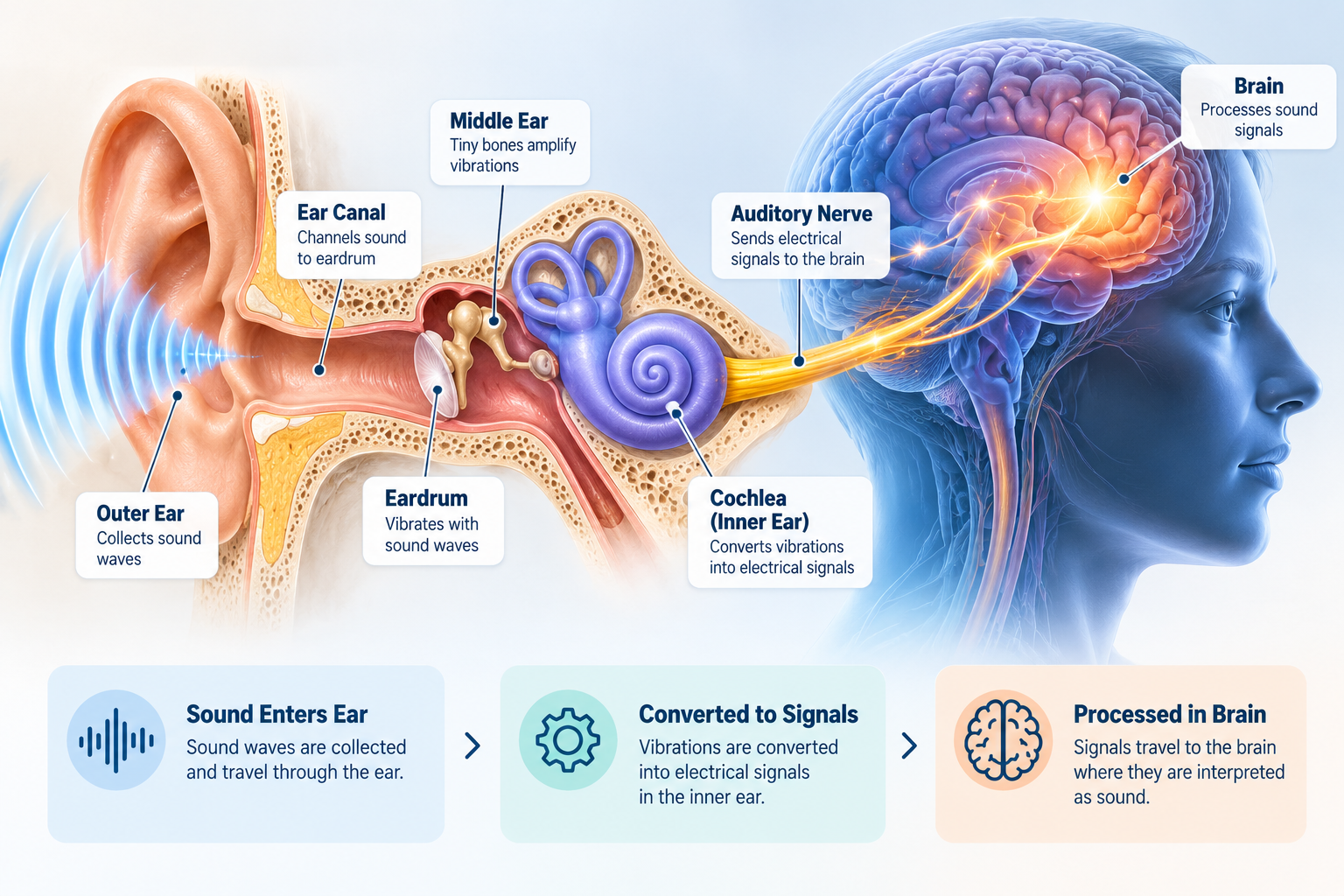
Sound is processed across the ear and auditory system.
Understanding tinnitus
What Is Tinnitus?
Tinnitus is the perception of sound when there is no corresponding external sound source. People describe it in different ways, and the sound may be occasional or persistent.
- Ringing or high-pitched tones
- Buzzing, humming or hissing
- Whistling, roaring or clicking
- A rhythmic pulsing sound
Important: Tinnitus is a symptom, not a diagnosis on its own. A clinician can help assess possible contributing factors and whether further medical evaluation is needed.
Everyday impact
How Tinnitus Can Affect Daily Life
Tinnitus affects people differently. For some it is mild; for others it can become distracting or upsetting, especially in quiet settings.
Sleep and rest
Quiet surroundings may make tinnitus more noticeable and can make it harder to settle down or stay asleep.
Focus and communication
Persistent sound may distract you during reading, work, conversations or other everyday activities.
Stress and wellbeing
Worry and stress can make tinnitus harder to cope with. Support may help reduce its impact on quality of life.
Possible contributing factors
What Can Cause Ringing in the Ears?
Tinnitus can have several contributing factors. Symptoms alone cannot identify the cause, so avoid self-diagnosing or assuming that one explanation applies to everyone.
- Hearing loss: tinnitus is commonly associated with changes in hearing.
- Loud-noise exposure: repeated or intense sound exposure can affect the hearing system.
- Earwax or ear conditions: a blockage or some middle-ear problems can trigger or worsen symptoms.
- Medicines or other health conditions: some medicines and medical conditions may be relevant; discuss these with a healthcare professional.
Do not stop prescribed medicines without speaking to the clinician who prescribed them.

Your next step
What Happens During a Tinnitus Assessment?
An assessment begins by understanding what you are experiencing. The exact tests and recommendations depend on your history, symptoms and the services available at the clinic.
- Discuss your symptoms
When the sound started, whether one or both ears are affected, and how it impacts your day. - Review hearing health
A hearing evaluation may be recommended to understand whether hearing changes are present. - Discuss findings and next steps
You can ask questions and discuss appropriate management or whether an ENT or other medical assessment is needed.

Individualised support
Tinnitus Management Options
There is no single treatment that removes tinnitus for everyone. Depending on the assessment, options may include addressing a contributing cause and strategies to reduce the impact of tinnitus.
Hearing aids when appropriate
If hearing loss is present, suitable hearing aids may improve access to environmental sounds and communication. They are not necessary or appropriate for every person with tinnitus.
Sound strategies
Some people find gentle background sound useful, particularly in quiet settings. The right approach varies, and advice should be tailored to the individual.
Clinical support and referral
Medical review may be needed to investigate possible causes. Cognitive behavioural therapy can help some people manage tinnitus-related distress; access should be discussed with an appropriate provider.
Only book or advertise a service after confirming that it is offered by Hear & Speak Clinic or its verified referral partners.
Safety first
When Should Tinnitus Be Checked Urgently?
Do not delay medical care if tinnitus occurs with concerning or sudden symptoms.
Seek urgent medical assessment if:
- You experience sudden hearing loss, particularly if it develops over hours or up to three days. Sudden hearing loss with tinnitus is time-sensitive and should be assessed urgently.
- You develop sudden facial weakness, difficulty speaking, new weakness or other sudden neurological symptoms. Seek emergency care.
- You have severe, new vertigo or dizziness, especially with other sudden symptoms.
Arrange a clinical assessment promptly for tinnitus that pulses with your heartbeat, persists in only one ear, or is worsening or significantly affecting daily life. A clinician can advise on the appropriate urgency.
Common questions
Frequently Asked Questions About Tinnitus
Clear, general information to help you decide what to ask at your appointment.
Can tinnitus go away on its own?
Sometimes. Tinnitus related to a temporary trigger may improve, but persistent tinnitus should be assessed, especially if it is new, one-sided or associated with hearing changes.
Can hearing loss cause tinnitus?
Tinnitus is commonly associated with hearing loss, although it can occur for other reasons and does not always mean that a person has measurable hearing loss.
Is there a permanent cure for tinnitus?
There is no universal cure that works for everyone. Depending on the cause and individual needs, assessment and management strategies may help reduce distress and improve daily functioning.
Can stress make tinnitus feel worse?
Stress and poor sleep can make tinnitus more difficult to cope with for some people. Support focused on coping, sleep and wellbeing may be helpful.
Can earwax cause ringing in the ears?
Earwax blockage can sometimes cause or worsen tinnitus. A clinician can check whether wax or another ear problem is present; avoid inserting cotton buds or objects into the ear canal.
Which professional should I consult for tinnitus?
An audiologist can assess hearing and discuss hearing-related support. An ENT specialist or another medical professional may be needed to investigate causes or red-flag symptoms.
Does tinnitus always affect both ears?
No. It may be perceived in one ear, both ears or in the head. Persistent tinnitus in one ear should be clinically assessed.
Take the next step
Looking for Tinnitus Help in Hyderabad?
If ringing, buzzing or other sounds are affecting your daily life, start by discussing your symptoms and whether a hearing assessment is appropriate.
Contact Hear & Speak Clinic to enquire about the next step for your situation.
This page provides general information and is not a diagnosis or a substitute for medical advice.